Short answer. Choose a pergola if you want filtered light, an open feel and a lower price. Choose a gazebo if you want full shade and a dry seat when it rains. In areas with heavy snow or strong wind, read the load ratings before anything else.
Key facts
- A pergola has an open or slatted roof that filters the sun, while a gazebo has a solid, closed roof that blocks sun and rain.
- At the same size and material, a basic pergola kit usually costs less than a hardtop gazebo, while louvered pergolas often cost more than a gazebo.
- A louvered pergola behaves like a gazebo in wind and snow when its louvers are closed, so the usual advice is to open them before a storm or snowfall.
- Makers of hardtop gazebos often publish a wind rating in miles per hour and a snow load in pounds per square foot, and those figures assume the frame is anchored as the manual says.
- Permit rules for pergolas and gazebos differ by city and county, and a structure fixed to the house, a solid roof or electrical wiring can each trigger a permit.
The roof is the whole difference
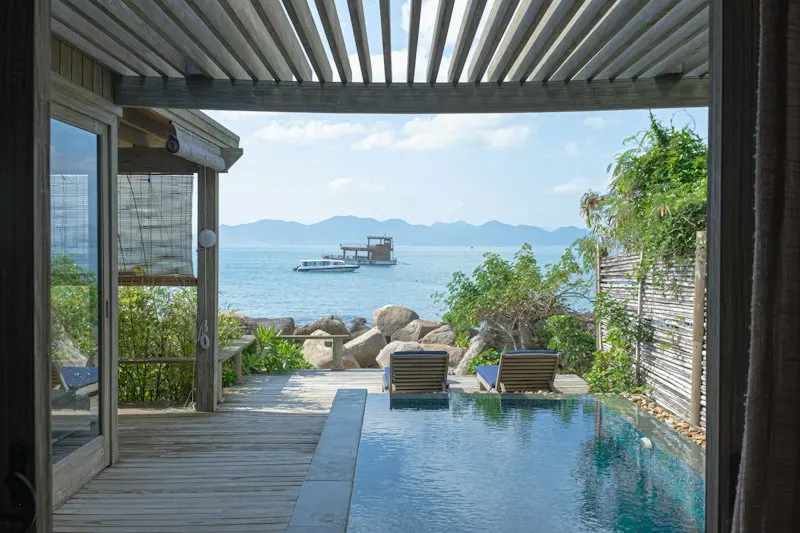
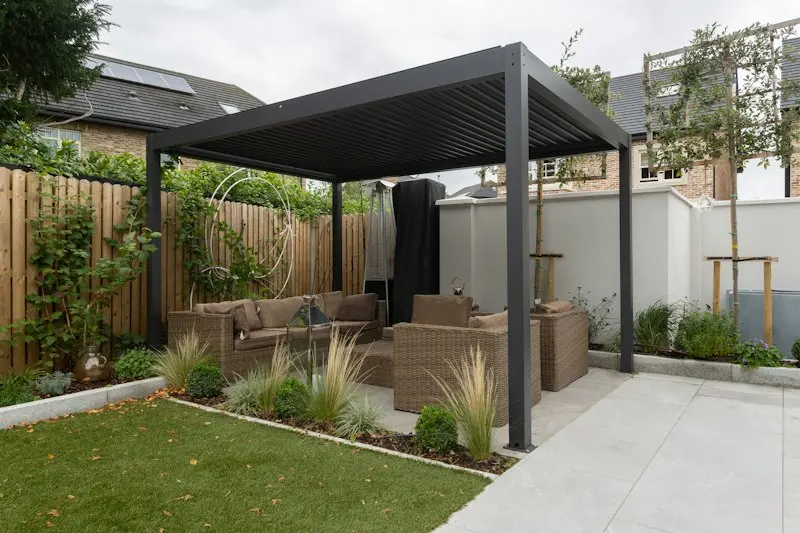
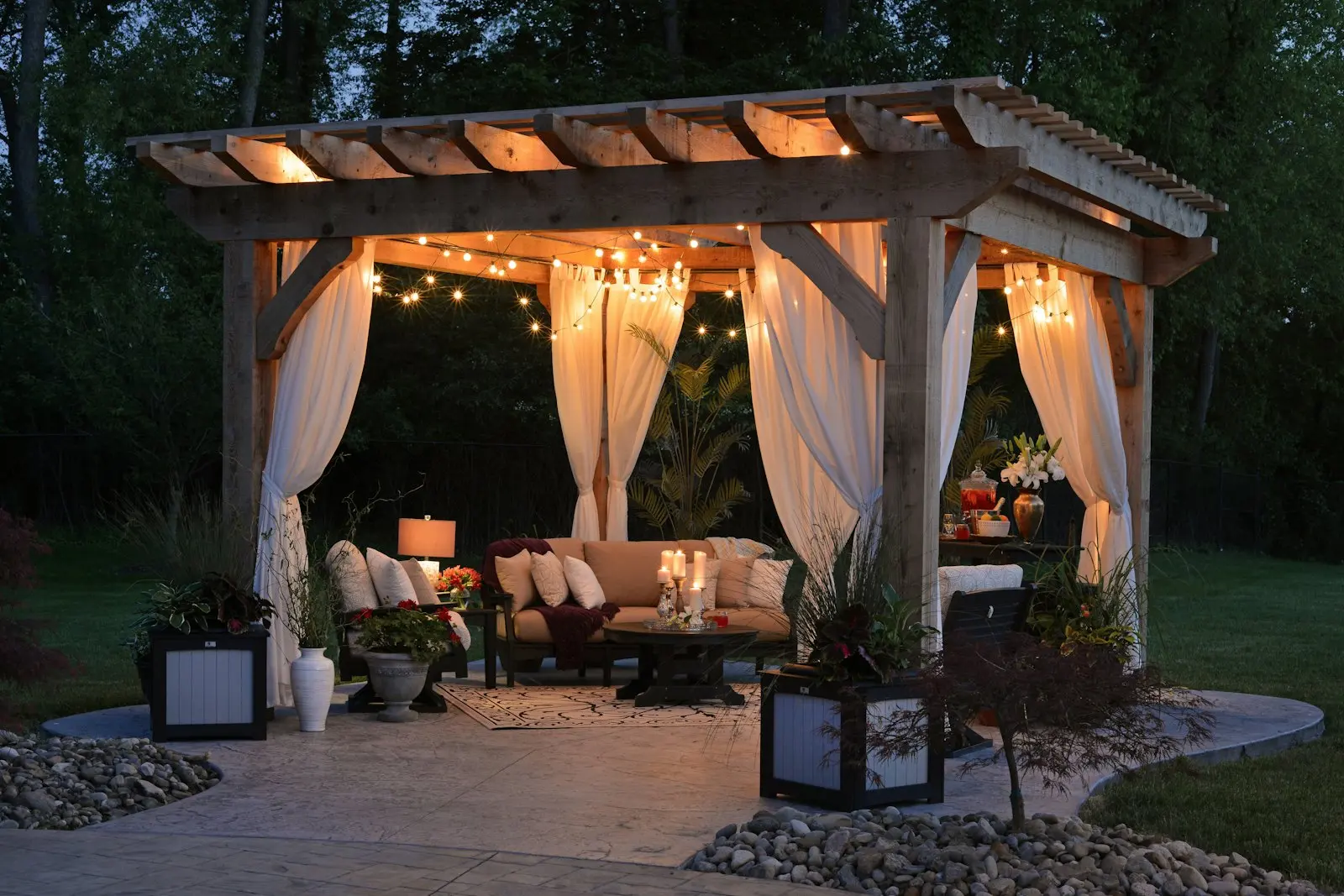
A pergola is four or more posts carrying beams and open rafters. Sun and rain pass between the rafters. Some pergolas add a fabric canopy or louvers that tilt and close, which moves them closer to a gazebo.
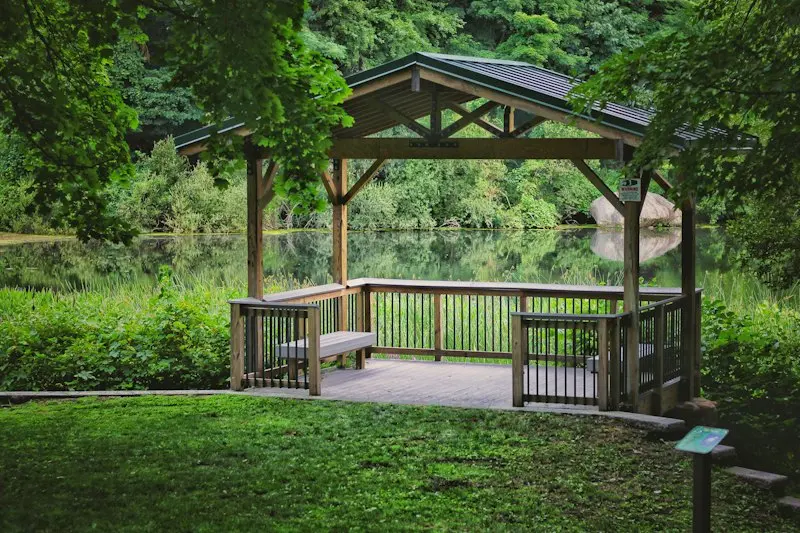
A gazebo has a full roof. Older designs are round or eight sided with a wood floor. Most kits sold today are rectangular, sit on an existing patio and have a steel or polycarbonate roof. Those are called hardtop gazebos. A soft top gazebo uses fabric instead.
A pavilion is close to a gazebo: a solid pitched roof on posts, usually larger, with open sides and no railings. Sellers use the two words loosely, so compare the specs, not the name.
Side by side
| Pergola | Gazebo | |
|---|---|---|
| Roof | Open rafters, louvers or a canopy | Solid, closed roof |
| Shade | Partial, changes with the sun angle | Full under the roof |
| Rain | Little or none, unless louvered | Dry in normal rain, less so in wind |
| Wind | Open roof catches less wind | Solid roof catches more, anchoring matters |
| Snow | Open rafters hold little snow | Roof must be rated for the load |
| Light under it | Bright | Darker, can dim a nearby room |
| Price level | Lower for basic kits, high for louvered | Mid to high for hardtops |
| Assembly | Fewer parts | More parts, roof work on ladders |
Shade and rain
A pergola with open rafters gives striped shade. At noon in summer, much of the sun still comes through. Closer rafters, a canopy or climbing plants raise the shade level. If shade at one fixed time of day matters, think about where the sun sits at that hour, since a low evening sun comes in from the side under any roof.
A gazebo gives full shade and keeps cushions dry in ordinary rain. Wind still blows rain in from the sides, so curtains or a privacy wall help on the exposed side.
Wind and snow
This is where a closed roof costs you something. A solid roof acts like a sail in wind and like a shelf in snow. Makers of hardtop gazebos often publish a wind rating in miles per hour and a snow load in pounds per square foot. Those numbers assume the frame is anchored as the manual says.
An open pergola lets most wind and snow through. A louvered pergola behaves like a gazebo when the louvers are closed, so the usual advice is to open them before a storm or snowfall. Our hardtop gazebo guide explains how to read these ratings.
Price level
Prices move with size and material more than with the type of structure. As a rough order, from lowest to highest:
- Soft top gazebos and small steel pergolas, often a few hundred dollars.
- Wood, vinyl and aluminum pergola kits, commonly from under one thousand to a few thousand dollars.
- Hardtop gazebos, commonly from about one thousand to several thousand dollars.
- Louvered pergolas and large pavilions, often several thousand dollars and up.
These are common ranges, not quotes. Add anchors, footings and any labor. See pergola materials compared for what each material means for upkeep.
Permits and HOA rules
Rules differ by city and county. Many places exempt small detached structures below a set floor area, and that limit is not the same everywhere. A structure fixed to the house, a solid roof, electrical wiring or a spot near the property line can each trigger a permit. HOAs often set their own limits on height, color and placement.
Call the local building department and read your HOA rules before you order. Ask about setbacks from the property line too.
Which suits which yard
- Small patio next to the house: a pergola keeps the adjoining room bright.
- Outdoor dining you want to use in the rain: a hardtop gazebo.
- Hot tub or outdoor kitchen: a gazebo for cover, with enough height and ventilation for the equipment.
- Heavy snow area: an open pergola, or a gazebo with a published snow load that meets local requirements.
- Windy, exposed yard: an open pergola anchored to concrete.
- Tight budget: a basic pergola kit.
Whichever you pick, confirm size, ratings and anchoring on the spec sheet of the exact model.
Common questions
What is the main difference between a pergola and a gazebo?
The roof. A pergola has an open or slatted roof that filters the sun. A gazebo has a solid, closed roof that blocks sun and rain. Everything else, from price to permits, follows from that.
Does a pergola keep rain out?
A classic pergola with open rafters does not. Louvered pergolas with slats that close, or pergolas fitted with a canopy, shed light rain, but check the spec sheet to see how the maker describes water resistance.
Which is cheaper, a pergola or a gazebo?
At the same size and material, a basic pergola kit usually costs less than a hardtop gazebo because it has no roof panels. Louvered pergolas are the exception and often cost more than a gazebo.
Do I need a permit for a pergola or a gazebo?
It depends on where you live. Many areas exempt small detached structures under a set floor area, and many do not. Attached structures usually need a permit. Ask your local building department and your HOA before you order.