Short answer. Wood looks warmest and needs the most care. Aluminum costs more up front and asks for almost none. Steel is strong and often cheap, but rust is the risk. Vinyl is low upkeep with a limited range of looks.
Key facts
- Aluminum and vinyl are the lowest maintenance pergola materials: neither rots, and the usual care is a wash with a hose and mild soap.
- A cedar pergola resists rot and insects naturally and weathers to silver gray if left bare, and keeping its color takes a sealer or stain every few years.
- Pressure treated pine is the budget wood for a pergola, but it is often sold damp and can twist, shrink or crack as it dries.
- Steel is stronger than aluminum for the same section, so a steel pergola can have slim posts and long spans, but it can rust wherever the coating is damaged.
- Vinyl pergolas are PVC sleeves, often over wood or metal inserts that carry the load.
Side by side
| Upkeep | Weight | Look | Price level | |
|---|---|---|---|---|
| Pressure treated pine | Stain or seal every few years | Heavy | Rustic, greenish or brown until stained | Low |
| Cedar | Seal to keep color, or let it gray | Medium | Warm, natural grain | Mid to high |
| Aluminum | Wash now and then | Light | Clean, modern lines | Mid to high |
| Steel | Touch up scratches, watch for rust | Heavy | Slim, modern | Low to mid |
| Vinyl | Wash now and then | Light to medium | Classic white or tan | Mid |
Price level compares kits of the same size. Thick-walled aluminum or a louvered roof can cost more than anything else in the table.
Wood: cedar and pressure treated pine
A wooden pergola kit is the traditional choice. It can be stained any color, cut to fit and repaired one board at a time.
Cedar has natural oils that resist rot and insects. It is lighter than treated pine and tends to stay straight. Left bare, it weathers to silver gray. To keep the red-brown color, plan on a sealer or stain every few years.
Pressure treated pine is infused with preservatives. It is the budget option and holds up well against rot. It is often sold damp, so it can twist, shrink or crack as it dries. The usual advice is to let it dry before staining. Use fasteners rated for treated lumber, since the treatment can corrode plain steel.
With either wood, the weak points are where water sits: post bottoms, flat tops of beams and cut ends. Post bases that hold the wood off the concrete help.
Aluminum
An aluminum pergola kit uses hollow extruded posts and beams with a powder coat finish. It does not rot and does not rust like steel. Care is usually a rinse with a hose.
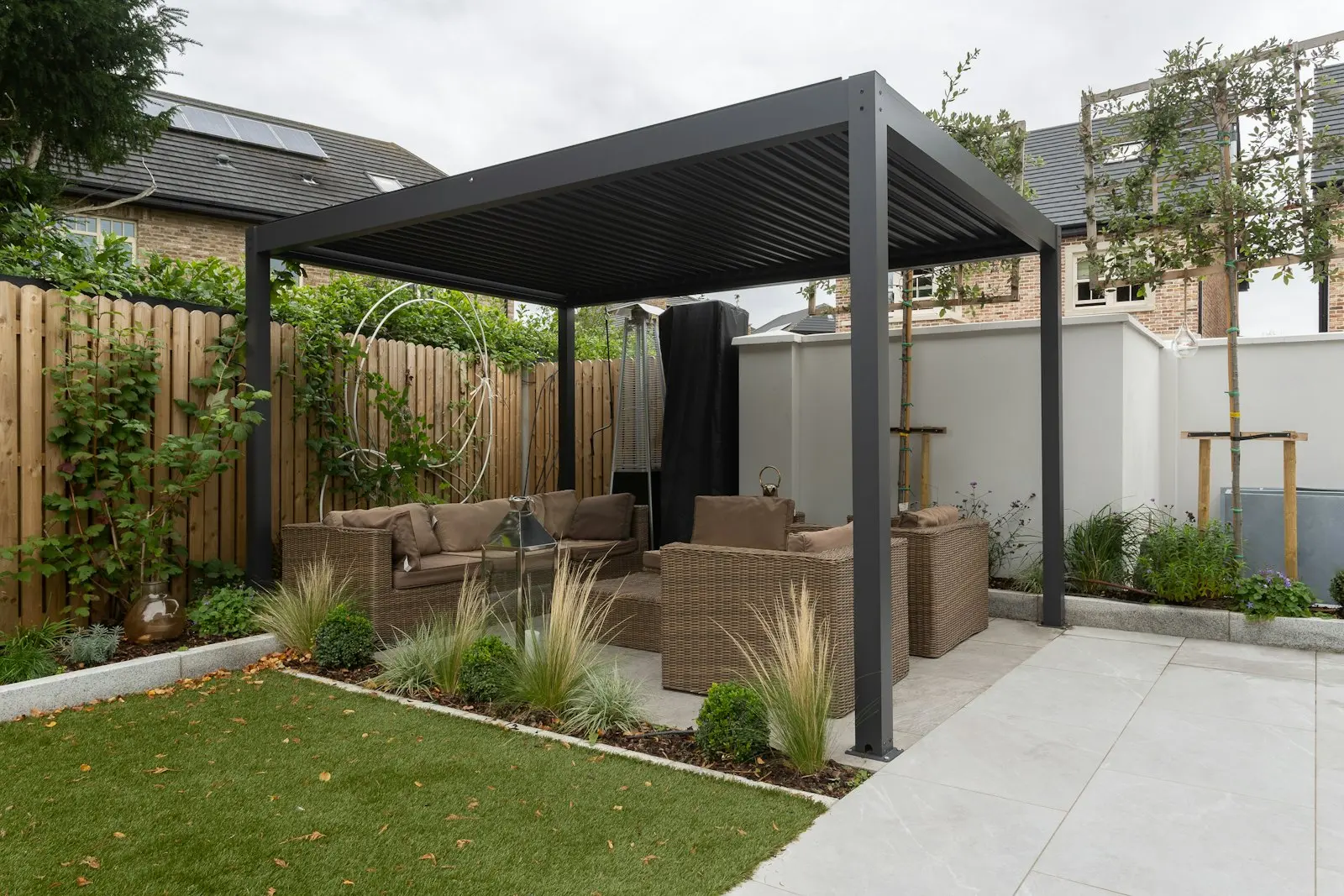
Because the parts are light, they are easier to lift during assembly. The same lightness means anchoring matters more in wind. Wall thickness varies a lot between kits, so compare the post size and thickness on the spec sheet. Most louvered pergolas are aluminum.
Limits: colors are set at the factory, usually black, charcoal, white or bronze, and a dented part is replaced, not repaired. In coastal air, ask about the coating and the fasteners.
Steel
Steel is stronger than aluminum for the same section, so posts can be slim and spans long. Steel kits are common at the low end of the market and in hardtop gazebo frames.
The trade-off is rust. Look for galvanized steel under the powder coat, which gives a second layer of protection. Any scratch or drilled hole that exposes bare metal should be touched up. Thin, light steel frames are sold cheaply and are the ones most likely to rust or flex, so check the weight and the post size.
Vinyl
Vinyl pergolas are PVC sleeves, often over wood or metal inserts that carry the load. They do not rot, do not need paint and clean up with soap and water.
The look is classic: white or tan, with shaped rafter ends. Colors are limited, and dark colors are rare. PVC moves with heat and can turn brittle in deep cold, so check what reinforcement is inside the posts and beams.
How to think about lifespan
No material has a fixed lifespan. It depends on climate, finish and care. A simple way to reason:
- Wood lasts as long as it is kept dry and sealed. Neglect shortens its life quickly.
- Aluminum lasts as long as its coating and connections do.
- Steel lasts as long as water stays off the bare metal.
- Vinyl lasts as long as the sun and cold do not make it brittle.
Warranty length is a useful hint. A maker that covers the frame for ten years or more is saying something a one year warranty does not. Read what the warranty excludes.
Which to choose
- You enjoy upkeep and want a natural look: cedar.
- Lowest price in wood: pressure treated pine.
- Least work over time: aluminum or vinyl.
- Long spans on a budget: galvanized, powder coated steel.
- Coastal home: aluminum or vinyl with stainless fasteners.
Next, see how to choose a pergola kit, or start with pergola vs gazebo if you are not yet sure about the roof. Confirm material, thickness and finish on the spec sheet of the exact model.
Common questions
What is the lowest maintenance pergola material?
Aluminum and vinyl. Neither rots, and a wash with a hose and mild soap is the usual care. Wood needs staining or sealing every few years, and steel needs its coating kept intact.
Is cedar better than pressure treated pine for a pergola?
Cedar resists rot and insects naturally, is lighter and tends to stay straighter. Pressure treated pine costs less and holds up well, but it can warp or crack as it dries. Both need a finish to keep their color.
Do aluminum pergolas rust?
Aluminum does not rust the way steel does. It can still oxidize or pit, especially in salty coastal air, so a good powder coat and stainless fasteners matter. Check the warranty terms for coastal use.
Which pergola material is strongest?
Steel is the strongest for a given size, which is why it suits long spans. Strength in practice depends on post size, wall thickness and connections, so compare those on the spec sheet rather than the material alone.