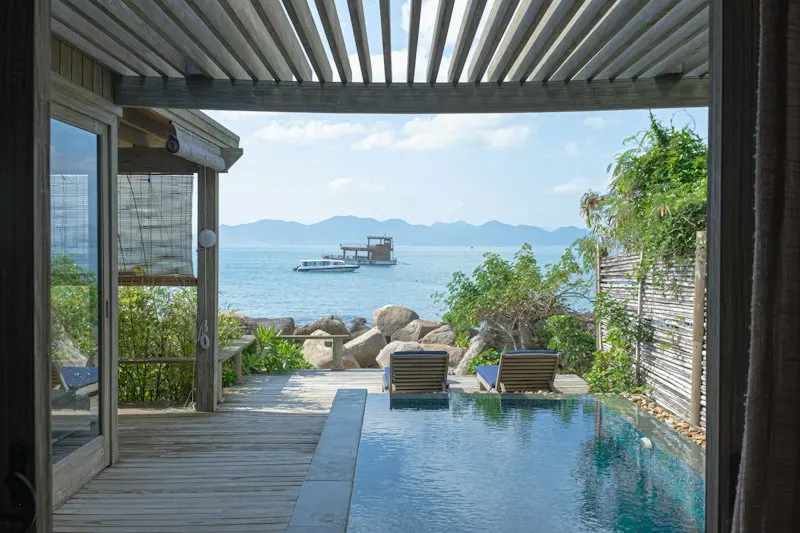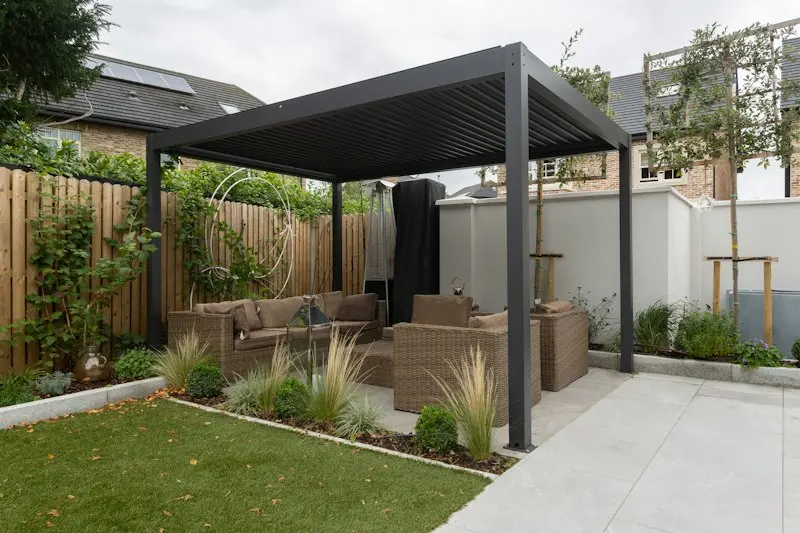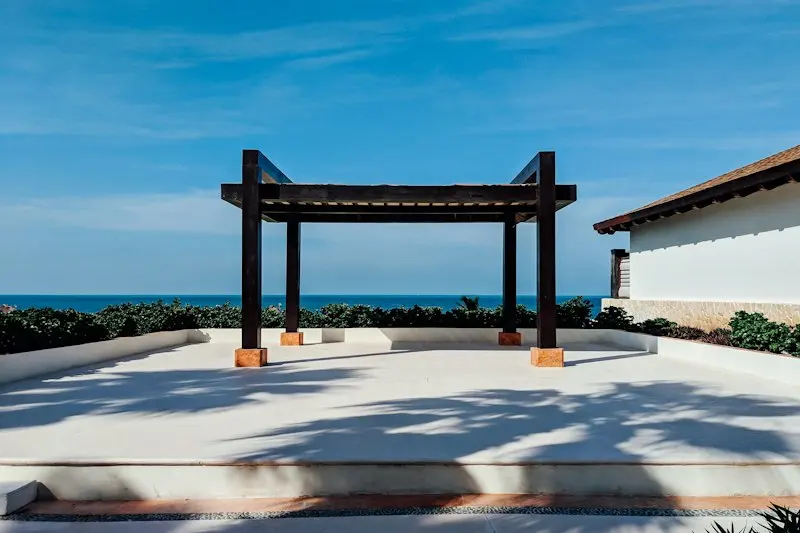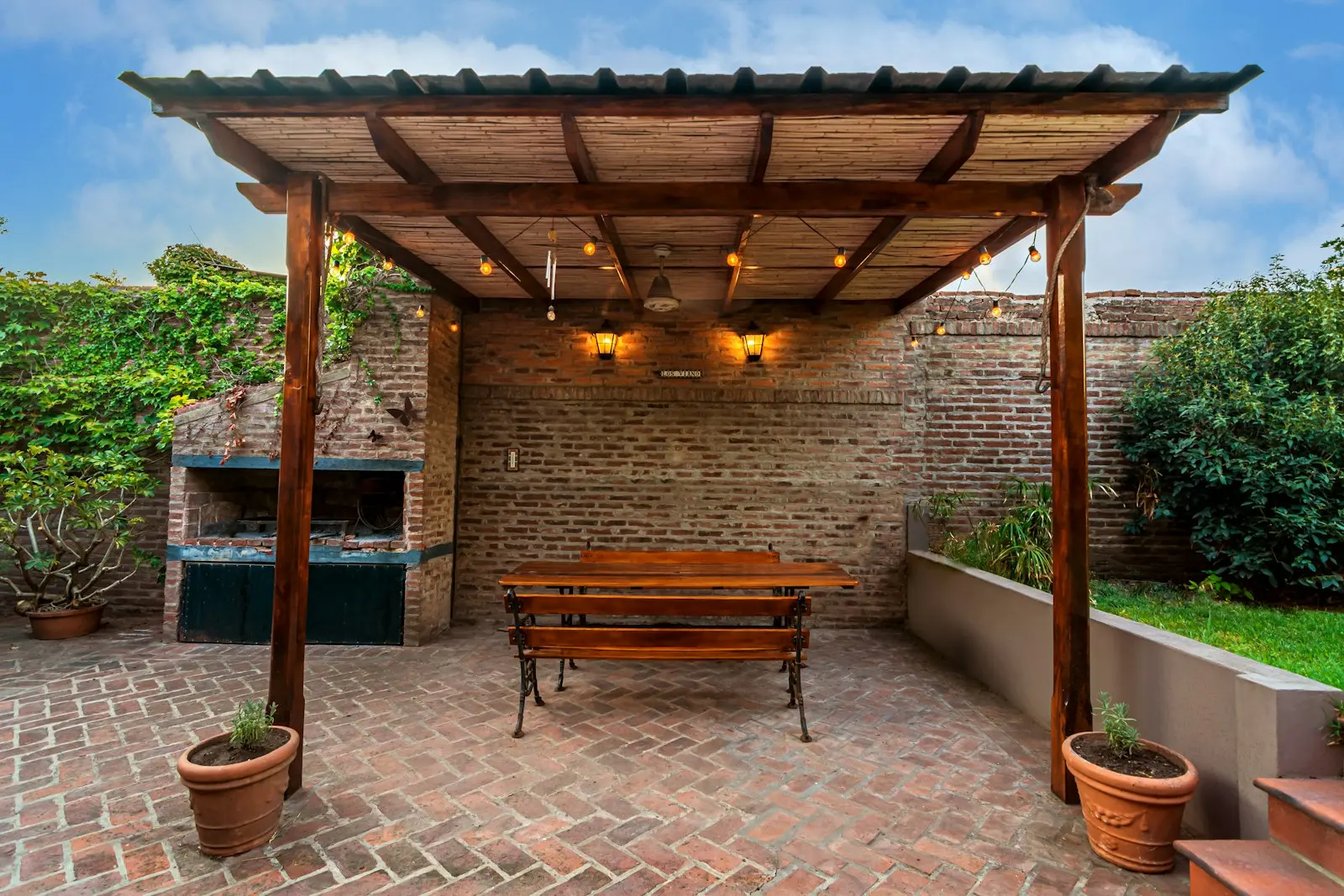
Short answer. To keep rain out, cover the pergola with polycarbonate panels, metal panels or a waterproof fabric, and give the cover a slope so water runs off. Shade cloth only filters the sun. Before you add any solid cover, check that the frame and anchors can take the extra wind and snow load, and ask whether the cover changes your permit.
Key facts
- The main ways to cover a pergola from rain are polycarbonate panels, metal roof panels and waterproof fabric, while shade cloth gives shade but lets rain through.
- A solid pergola cover needs a slope so water runs off, and panel makers commonly call for a minimum pitch that is given in their installation guide.
- Adding a solid cover to an open pergola makes it catch wind and hold snow like a roof, so the frame, the connections and the anchors have to suit those loads.
- A pergola with a solid roof is often treated differently from an open pergola for permits, so the local building department should be asked before the cover is added.
- Shade cloth is a knitted mesh sold by shade percentage that blocks part of the sun and lets air and rain pass through.
What are the options to cover a pergola?
Four families: clear or tinted polycarbonate panels, metal roof panels, fabric canopies and shade cloth. The first three shed rain. Shade cloth does not.
| Cover | Rain | Light underneath | Wind and snow | Cost level |
|---|---|---|---|---|
| Polycarbonate panels | Sheds rain when sloped and sealed | Bright, clear or tinted | Acts as a solid roof | Mid |
| Metal roof panels | Sheds rain when sloped and sealed | Full shade, darker | Acts as a solid roof | Mid |
| Waterproof fabric canopy | Sheds light to moderate rain | Soft, even shade | Catches wind, not made for snow | Low to mid |
| Shade cloth or shade sail (mesh) | Lets rain through | Filtered shade | Lets some wind through, remove before snow | Low |
| Louvered roof | Sheds rain when closed | Adjustable | Solid roof when closed | High |
A louvered roof is normally bought as a complete kit, not added to an existing frame. See louvered pergola kits.
Polycarbonate panels
Polycarbonate is a rigid plastic sold as corrugated sheets or as flat multiwall sheets with air channels inside. It keeps the space bright, which suits a pergola next to a window. Clear panels let heat through, so tinted or opal sheets are common in hot, sunny yards.
The panels expand and shrink with temperature. Makers ask for oversized screw holes, their own fasteners and closure strips. Look for a UV-protected side, which has to face the sun. Rain on polycarbonate is quieter than on metal.
Metal panels
Corrugated or ribbed steel or aluminum panels give full shade and a long life. They are louder in rain and make the space darker. Steel panels need their coating kept intact, and cut edges are where rust starts. On a wood pergola the panels usually sit on added cross pieces called purlins, fixed with gasketed roofing screws.
Fabric canopy
A coated fabric canopy is the lightest and cheapest rain cover. It can be fixed or sliding. It sheds light rain if it has a slope, and it sags and pools if it does not. It comes down in strong wind and before snow. See pergolas with a retractable canopy.
Shade cloth
Shade cloth is a knitted mesh, sold by shade percentage. It blocks part of the sun and lets air and rain pass. Because air passes through, it pulls less on the frame than solid fabric. It is the right pick when you want cooler shade and do not care about rain.
How much slope does a pergola cover need?
Enough for water to run off without pooling. The exact minimum pitch depends on the panel and is given in the maker's installation guide.
Most pergolas are built with a flat top, so the slope has to be created. Common ways:
- Tapered strips or stepped purlins on top of the rafters.
- Posts cut shorter on one side, on a new build.
- On an attached pergola, a ledger set higher than the outer beam, so water runs away from the house.
Panels with corrugations or channels run down the slope, never across it. Overlaps, closure strips and sealing follow the panel guide.
Where does the water go?
A covered pergola collects all the rain that used to fall through, and drops it along one edge.
- Fit a gutter and a downspout on the low side, or plan a gravel strip or drain where the water lands.
- Send the water away from the house, the footings and the neighbor's lot.
- On an attached pergola, the joint between the cover and the wall needs flashing. See attached vs freestanding pergolas.
Does a roof change the wind and snow load?
Yes, a lot. An open pergola lets most wind and snow pass. With a solid cover, wind pushes up and down on the whole surface and snow stays on top.
That affects three things:
- The frame. Rafter size and spacing that are fine for an open top may not suit a roof carrying snow. Kit makers rate their frames for the roof they sell, not for one you add.
- The connections. Wind lifts a covered roof. Rafters, beams and posts need positive connections, not just gravity and a few screws.
- The anchors and footings. Uplift and side load end at the post bases. See how to anchor a gazebo or pergola.
We cannot tell you what your frame will carry. Ask the kit maker whether a solid cover is allowed and what ratings apply with it. For a site-built or modified pergola in a snow or high wind area, a licensed contractor or a structural engineer is the right person to check it. The local building department can give you the design snow load and wind speed for your address.
Does a roof change the permit?
It can. Many building departments treat an open pergola and a roofed structure differently. A solid cover can change the category of the structure, its allowed size without a permit, the setback rules and, when attached, how it connects to the house. Some HOAs allow open pergolas and restrict solid roofs.
Rules differ by city and county, so do not rely on a general answer. Call the building department before you buy panels, describe the cover and ask what they need. Our page on pergola and gazebo permits lists the questions to ask.
What is a pergola roof kit?
It is a packaged cover: panels or fabric, the rails or purlins, the fasteners and the trim. Some are made for one brand of frame, and some are sold as universal.
What to check before ordering one:
- The frame sizes and rafter spacing the kit fits.
- Panel type, thickness and UV protection.
- The minimum slope and how the kit creates it.
- Any wind and snow figures, and what frame they assume.
- Whether gutters, flashing and closure strips are included.
We compare published specs only. The installation guide of the exact product, and your building department, have the final word.
Common questions
How do I cover a pergola from rain?
Fit a cover that sheds water: polycarbonate panels, metal roof panels or a waterproof fabric canopy, set on a slope so the water runs to one side. Check first that the frame and anchors suit the added wind and snow load.
What is the cheapest way to cover a pergola?
Fabric. A shade sail, shade cloth or a simple canopy costs the least, but shade cloth does not stop rain and fabric needs replacing. Rigid panels cost more and last longer.
Can I put a roof on an existing pergola kit?
Sometimes. Some makers sell a roof kit for their frames. For any other cover, ask the maker whether the frame is rated for a solid roof, because a cover adds wind and snow load the kit may not be built for.
Does a pergola roof need a slope?
Yes, for any cover meant to shed rain. A flat cover pools water and leaks. Panel makers give a minimum pitch in their installation guide, so follow that figure.
Do I need a permit to add a roof to a pergola?
Possibly. Many areas treat a solid-roofed structure differently from an open pergola. Rules vary by city and county, so ask your local building department and your HOA before you add a cover.